

Healthcare in Mexico operates through both public and private systems. The main public institutions include IMSS, IMSS-Bienestar, and ISSSTE, each serving different populations and eligibility categories. Public healthcare provides care through government-operated facilities rather than private hospitals. Expats -and the public in general- who want access to private hospitals, greater provider choice, and English-speaking medical professionals must use private healthcare, be that by paying out of pocket or through private health insurance.
Key Takeaways
- Mexico has both public and private healthcare systems, and they operate very differently.
- IMSS, IMSS Bienestar, and ISSSTE are not interchangeable programs and have different eligibility requirements.
- Public healthcare means receiving treatment within the public healthcare network, not at private hospitals.
- Mexico has a substantial private healthcare sector, used even by many people who have access to public healthcare, mainly due to long waiting lists or limited capacity in the public healthcare system
- Private health insurance can help protect expats from potentially significant private hospital expenses while giving them access to a broader choice of private providers.
Healthcare in Mexico for Expats: Understanding Your Options
Moving to Mexico can mean adjusting to a very different healthcare system.
For Americans, Canadians, retirees, digital nomads, and other foreign residents, one of the most important distinctions to understand is that Mexico does not have one single healthcare system. Instead, public and private healthcare operate alongside each other, with different institutions serving different populations.
The major public healthcare institutions include the Instituto Mexicano del Seguro Social (IMSS), IMSS-Bienestar, and the Instituto de Seguridad y Servicios Sociales de los Trabajadores del Estado (ISSSTE).
Mexico also has an extensive private healthcare system made up of private hospitals, clinics, specialists, laboratories, and physicians.
Understanding the difference matters because having access to public healthcare does not mean you can choose a private hospital and have the government pay for your treatment.
For expats planning to live in Mexico, knowing where you would actually receive care—and how you would pay for it—should be an important part of your relocation planning.
How Does the Healthcare System in Mexico Work?
Mexico’s healthcare system can be broadly divided into two categories:
Public healthcare: Is provided through government institutions and their healthcare networks.
Private healthcare: Is delivered through privately operated hospitals, clinics, and medical practices and is normally paid for either out of pocket or through private health insurance.
Within the public system, eligibility depends on factors such as employment, social security status, and the specific institution.
This is where the system can become confusing for foreigners. IMSS and IMSS-Bienestar, for example, have similar names but are not the same healthcare program.
Understanding each one individually makes the system much easier to navigate.
What Is IMSS?
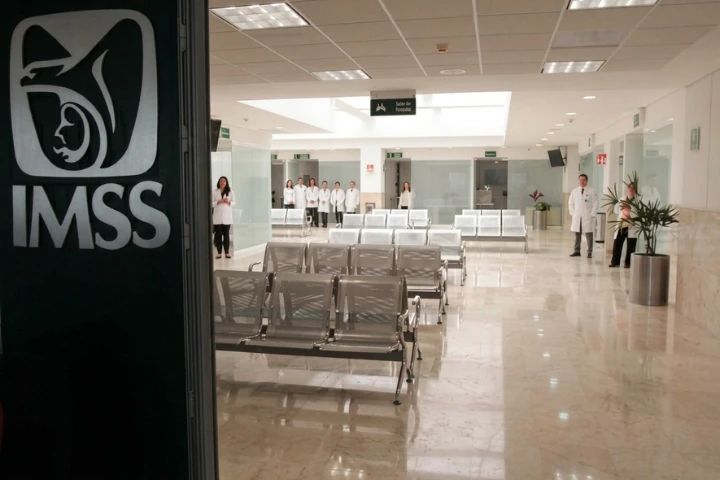
The Instituto Mexicano del Seguro Social (IMSS) is one of Mexico’s primary social security institutions.
For many Mexican workers in the private sector, enrollment in IMSS is connected to formal employment. Eligible workers and their registered dependents can receive medical services through the IMSS healthcare network.
IMSS provides services that can include primary care, specialist care, hospitalization, surgery, pharmacy services, and maternity care.
However, receiving healthcare through IMSS means using the IMSS system and its assigned network of public facilities and providers, meaning you cannot choose the hospital or doctor for your treatment/procedure, or expect any kind of service in English.
This is an important distinction for expats. IMSS coverage should not be confused with private medical insurance that allows an insured person to seek covered treatment at participating private hospitals, choose a doctor, or choose a city.
Can Expats Join IMSS?
Some foreigners living legally in Mexico may be able to access IMSS through employment or other eligible enrollment mechanisms.
IMSS also currently offers a voluntary program called Seguro de Salud para la Familia, or Health Insurance for the Family, for people who do not have another public social security arrangement.
According to IMSS, this program is purchased through annual contributions based on the person’s age. As of March 1, 2026, published annual contributions range from MXN $9,300 for people ages 0–19 to MXN $22,150 for people age 80 and older.
But price should not be the only consideration.
IMSS states that voluntary enrollment is subject to health-related conditions. Certain pre-existing conditions may prevent enrollment, some conditions have waiting periods, and specific services or treatments are excluded.
This is particularly important for retirees and older expats who may assume that voluntary IMSS enrollment automatically provides unrestricted coverage for their existing medical conditions.
What Is IMSS Bienestar?
One of the most common sources of confusion for foreigners is the name IMSS Bienestar.
Despite sharing the letters “IMSS,” IMSS Bienestar should not simply be treated as another enrollment option within regular IMSS coverage.
IMSS Bienestar provides public healthcare services for people without social security coverage in Mexican states participating in the program.
According to IMSS Bienestar’s current eligibility information, its registration applies to people without social security who live in one of the 23 states participating in IMSS Bienestar and who are not affiliated with IMSS or ISSSTE.
Its purpose is therefore fundamentally different from that of traditional employment-based IMSS.
For an expat, the key point is straightforward: IMSS Bienestar is part of Mexico’s public healthcare infrastructure. It is not private health insurance and does not provide access to Mexico’s private hospital system or medical network.
What Happened to INSABI?
Expats who have researched Mexican healthcare in previous years may have encountered the name INSABI, or Instituto de Salud para el Bienestar.
INSABI is no longer the current model that foreigners should use when trying to understand Mexico’s public healthcare structure.
The system has undergone significant reforms, and IMSS Bienestar has assumed a central role in providing public healthcare services to people without social security in participating states.
This is an important update because older blogs, videos, forums, and expat discussions may still refer to INSABI as though it were the current system.
When researching healthcare in Mexico, always check the publication date of the information you are reading.
What Is ISSSTE?
The Instituto de Seguridad y Servicios Sociales de los Trabajadores del Estado (ISSSTE) is another major component of Mexico’s public healthcare and social security system.
Unlike IMSS, which is closely associated with workers in Mexico’s private employment sector, ISSSTE primarily serves eligible government workers, pensioners, retirees, and registered dependents.
For most foreign retirees or digital nomads moving independently to Mexico, ISSSTE will therefore not be an option unless they acquire eligibility through the applicable employment or family relationship.
Like IMSS, healthcare provided through ISSSTE is delivered through the institution’s own public healthcare infrastructure.
IMSS vs. IMSS-Bienestar vs. ISSSTE
Here is a simplified way for an expat to understand the three systems:
| System | Primarily Designed For | Type of Healthcare | Private Hospital Access?* |
|---|---|---|---|
| IMSS | Eligible private-sector workers, dependents, and certain voluntary enrollees | Public | Generally no |
| IMSS Bienestar | People without social security in participating states | Public | Generally no |
| ISSSTE | Eligible government employees, retirees, pensioners, and dependents | Public | Generally no |
| Private Healthcare | Anyone able to pay privately or use applicable insurance | Private | Yes |
Public institutions may have specific agreements, referrals, outsourcing arrangements, or exceptional circumstances. The important distinction for an expat is that public enrollment does not function like a private insurance policy that generally allows the insured to select private hospitals within an insurance network.
Does Public Healthcare Give You Access to Private Hospitals in Mexico?
The answer is NO.
This is one of the most important misconceptions for expats to understand.
Public healthcare enrollment and private hospital access are two different things.
If you receive healthcare through IMSS, IMSS Bienestar, or ISSSTE, your healthcare is delivered through the facilities and provider networks belonging to or contracted by that public system.
That is very different from having private health insurance or when you pay out of pocket.
With an appropriate private health insurance policy, covered medical care may be obtained through eligible private hospitals and physicians, granting access to a much wider medical network, English-speaking doctors and medical staff, and overall, a much faster and smoother experience when we’re most vulnerable.
This distinction becomes especially important when an expat says: “There is a great private hospital five minutes from my home, so I’m covered if something happens.”
The hospital being nearby does not determine who will pay the bill.
If it is a private hospital and you do not have applicable private insurance, you will be responsible for paying the medical expenses yourself.
What Is Private Healthcare Like in Mexico?
Mexico has a well-established private healthcare sector that includes hospitals, specialty centers, independent physicians, diagnostic centers, laboratories, and outpatient clinics, among other healthcare-related providers.
INEGI’s 2024 statistics identified 2,747 private healthcare establishments with hospitalization services included in its statistical records. Those establishments collectively reported extensive medical infrastructure, including 17,390 consulting rooms and 5,193 operating rooms.
Private healthcare is particularly visible in major cities and popular expat destinations such as Mexico City, Guadalajara, Monterrey, Puerto Vallarta, Los Cabos, Queretaro, Playa del Carmen, Cancun, Merida, and other urban and tourist areas.
For foreign residents, private healthcare can offer advantages such as:
- Greater ability to select physicians and hospitals
- Direct access to private specialists in many circumstances
- More advanced and efficient medical equipment and procedures
- Private or semi-private hospital accommodations depending on the facility
- Greater likelihood of finding English-speaking physicians in major expat and tourist destinations
- Access to private diagnostic and treatment facilities
- And more flexibility when seeking second opinions or choosing specialists
And more flexibility when seeking second opinions or choosing specialists
Do Mexicans Use Private Healthcare Too?
Absolutely, and this is an important part of understanding Mexican healthcare.
Private healthcare is not simply a parallel system created for wealthy foreigners or tourists. Mexicans themselves make substantial use of private providers.
A national analysis from Mexico’s ENSANUT 2022 found that private providers accounted for approximately 48% of the providers used for the most recent reported healthcare need in the study, despite much of the population having some form of public healthcare entitlement.
Although there is an important distinction between using private healthcare and having private health insurance, many people in Mexico pay doctors, clinics, laboratories, and even hospitals directly out of pocket, which demonstrates how significant the private sector is within Mexico’s overall healthcare landscape.
Why Do People With Public Healthcare Still Use Private Doctors?
Having public healthcare eligibility does not necessarily mean someone will use the public system every time they need medical attention.
People may choose private care because of provider preference, convenience, appointment availability, location, privacy, access to specialists, or the desire to receive treatment at a particular hospital.
A person may technically have access to IMSS or another public institution but still visit a private physician for routine care.
The financial risk becomes much greater, however, when the medical problem is no longer a routine consultation. A private doctor’s appointment may be manageable out of pocket. A major surgery, hospitalization, cancer treatment, serious accident, or prolonged medical condition can be a very different financial commitment.
That is where private health insurance becomes particularly relevant.
Is Private Healthcare in Mexico Affordable?
This question deserves nuance.
Routine private medical care in Mexico can sometimes feel inexpensive to foreigners—particularly those comparing a doctor’s consultation with prices in the United States.
But affordable routine care does not necessarily mean affordable catastrophic care.
A consultation, laboratory test, or prescription is fundamentally different from emergency surgery, intensive care, cancer treatment, cardiac procedures, major trauma, long hospital stays, complex orthopedic surgery, or chronic specialty treatment.
This is one of the biggest mistakes expats can make when evaluating healthcare in Mexico.
Someone may visit a private doctor several times, pay reasonable amounts out of pocket, and conclude: “Healthcare is cheap here. I don’t need insurance.”
The real purpose of major medical insurance is not to pay every small healthcare expense. Its most important role is protecting against large, unpredictable medical expenses that could otherwise have a substantial financial impact.
What Does Private Health Insurance in Mexico Do?
Private health insurance gives expats something the public healthcare system generally cannot: greater control over where, how, and by whom they receive medical care.
Instead of relying exclusively on the public healthcare system and its assigned facilities, an appropriate private health insurance policy can give you access to Mexico’s private healthcare system—including private hospitals, specialists, diagnostic centers, surgeries, hospitalization, and emergency care, subject to the terms and conditions of your policy.
The difference becomes especially important when something serious happens. If you need surgery, hospitalization, or specialized treatment, you may want the ability to choose a private hospital you trust, seek care from a specialist, obtain a second opinion, or find a physician who speaks English. Private health insurance can make those options financially accessible without requiring you to absorb the full cost of a major medical event on your own.
For many expats, that combination of choice, access, and financial protection is the real value of private health insurance in Mexico.
However, not all policies provide the same level of protection. Deductibles, coinsurance, hospital and physician networks, geographic coverage, coverage in the United States, policy limits, pre-existing conditions, waiting periods, maternity benefits, renewal conditions, and underwriting requirements can vary significantly between plans.
That is why choosing a policy based solely on the annual premium can be a costly mistake.
The better question is not simply, “How much does the insurance cost?” It is, “Where can I receive care, what choices will I have, and how well will I be protected when I actually need it?
Which Healthcare Option Is Best for Expats in Mexico?
There is no single answer for every foreign resident.
Someone who is young, healthy, fluent in Spanish, comfortable using public facilities, and eligible for a public program may evaluate healthcare differently from a retired couple who wants access to specific private hospitals and English-speaking specialists.
Likewise, an American expat who regularly returns to the United States may have very different insurance needs from someone who expects to receive virtually all medical care in Mexico.
Before deciding, ask yourself: Where would I actually want to be treated if I had a serious medical emergency tomorrow?
If your answer is a specific private hospital, then your healthcare planning should account for how that hospital bill would be paid.
That could mean self-funding your healthcare expenses, maintaining another applicable source of coverage, or purchasing private health insurance. For many expats, private health insurance provides the balance they are looking for: access to Mexico’s private healthcare system combined with financial protection against major medical expenses.
Public Healthcare vs. Private Healthcare in Mexico
Neither system should be reduced to “good” or “bad.” They are designed and financed differently. For an expat, the more useful question is: Which healthcare experience and financial risk are you comfortable with?
| Consideration | Public Healthcare | Private Healthcare |
|---|---|---|
| Hospitals | Public system facilities | Private hospitals |
| Physician choice | More restricted and assigned by the facility | Generally greater choice |
| Specialist access | Often follows institutional referral pathways | Direct access |
| English-speaking care | Not guaranteed | Commonly available in major expat markets |
| Cost to patient | Based on eligibility/program | Out-of-pocket or private insurance |
| Hospital selection | Limited by public system | Greater selection, usually giving free choice to patient |
| Financial exposure | Lower direct private-hospital exposure when treated within public system | Potentially significant without insurance |
Frequently Asked Questions
Not automatically. Access to public healthcare depends on eligibility and the applicable institution. Private healthcare charges for its services and is generally paid out of pocket or through private insurance.
Foreign residents may qualify for IMSS through employment or certain voluntary enrollment mechanisms. IMSS currently offers Seguro de Salud para la Familia to eligible individuals who do not have another public social security arrangement, subject to enrollment requirements and health-related restrictions.
No. IMSS Bienestar serves people without social security in participating states, while traditional IMSS is a social security institution closely tied to formal employment and other eligible enrollment categories.
INSABI is no longer the principal model for providing healthcare to people without social security. Mexico transitioned those functions toward the IMSS Bienestar model. Older online information mentioning INSABI may therefore be outdated.
No. IMSS coverage provides care through the IMSS healthcare system rather than functioning as private medical insurance that lets you freely select private hospitals.
ISSSTE is Mexico’s social security institution primarily serving eligible government employees, pensioners, retirees, and qualifying dependents.
Yes. Private healthcare plays a significant role in Mexico. ENSANUT 2022 data showed substantial use of private providers (about 48%) even among people with public healthcare entitlement.
You do not necessarily need insurance to receive private care if you can pay for it yourself. However, without applicable insurance, you may be responsible for the entire bill, which can become significant for hospitalization or major treatment.
A significant percentage of them are, particularly in private hospitals and communities with large international populations, but English-speaking care should never be assumed. Public healthcare is principally designed to serve Mexico’s Spanish-speaking population.
It depends on the insurer, policy, medical underwriting, and condition. A pre-existing condition may be excluded, accepted under specific terms, subject to a waiting period, or affect eligibility. Never assume a condition is covered without reviewing the policy terms.
When possible, it is worth evaluating coverage before relocating. Age and medical history can affect eligibility, pricing, and underwriting, and waiting until after a serious diagnosis develops can reduce your insurance options to very few or zero.
Expert Insight
One of the most common mistakes we see when speaking with international residents is confusing the cost of everyday healthcare with the cost of a major medical event.
Mexico can offer excellent value for routine private care. That sometimes gives newcomers a false sense of security. Paying out of pocket for a doctor’s appointment is one thing. Paying for a major hospitalization is another.
Before deciding that you can comfortably self-insure, identify the private hospitals you would realistically use in an emergency and consider what would happen financially if you needed surgery, intensive care, or prolonged treatment there.
We also recommend comparing insurance policies based on coverage, not simply premium. A lower-cost policy may have a higher deductible, narrower hospital network, geographic restrictions, or other limitations that become extremely important when you actually need to use it.
The goal should not be to buy the cheapest insurance. The goal should be to understand where you want to receive care, what risks you want to transfer to an insurer, and which policy best accomplishes that objective.
Common Mistakes to Avoid
1. Assuming all healthcare in Mexico is public or free. Mexico has large public and private healthcare sectors. The healthcare system you choose will determine how your care works.
2. Confusing IMSS with IMSS Bienestar. Despite the similar names, they serve different populations and operate under different eligibility structures.
3. Assuming public coverage pays for your preferred private hospital. Public healthcare operates through public institutional networks. If you specifically want private hospital care, plan separately for how you will finance it.
4. Believing private healthcare is always inexpensive. Routine care may seem affordable, but major hospital treatment can create substantial financial exposure.
5. Waiting until you develop a medical condition to shop for insurance. Private insurance is subject to underwriting. Your medical history can affect eligibility and coverage.
6. Choosing insurance solely by premium. Coverage and benefits, deductibles, coinsurance, hospital networks, policy limits, geographic coverage, and exclusions can be more important than a small difference in annual price.
7. Assuming every doctor speaks English. English-speaking providers are common in certain private healthcare markets, but they are never guaranteed. In the public healthcare system, it’s rarely available.
8. Relying on outdated information about Mexico’s healthcare system. Mexico’s public healthcare structure has changed significantly in recent years. Information about INSABI, IMSS Bienestar, enrollment, and eligibility should always be verified with current sources.
Final Thoughts
Understanding healthcare in Mexico for expats starts with one fundamental distinction: Mexico has both public and private healthcare, and access to one does not automatically provide access to the other.
IMSS, IMSS Bienestar, and ISSSTE serve different populations within Mexico’s public healthcare structure. Private hospitals and physicians operate separately and can be accessed by paying out of pocket or, for covered services, through applicable private health insurance.
For expats, the best strategy depends on eligibility, age, health, budget, location, preferred hospitals, and how much financial risk you are comfortable assuming.
Before choosing coverage, think beyond your next doctor’s appointment. Ask yourself where you would want to receive treatment during a serious medical event and how you would pay for it.
That answer should guide your healthcare strategy in Mexico.
Need Help Choosing Coverage?
Guardian Insurance MX helps expats, retirees, digital nomads, and international residents find the right insurance solutions in Mexico.
Speak with an expat insurance advisor to compare private health insurance options, understand hospital networks, and determine which type of coverage best fits your healthcare needs in Mexico

Editorial note: Mexico’s healthcare system and insurance market can change over time. This article is for general informational purposes only. Eligibility, benefits, exclusions, provider networks, underwriting requirements, and policy terms vary by institution and insurer. Always verify current public healthcare requirements with the appropriate government institution and review insurance options with an insurance advisor before making coverage decisions.